Becoming a…
Installation and Maintenance Electrician
Also known as:
- Electrician
- Installation electrician
- Maintenance electrician

Routes to a career
Level 3
Installation and Maintenance Electrician
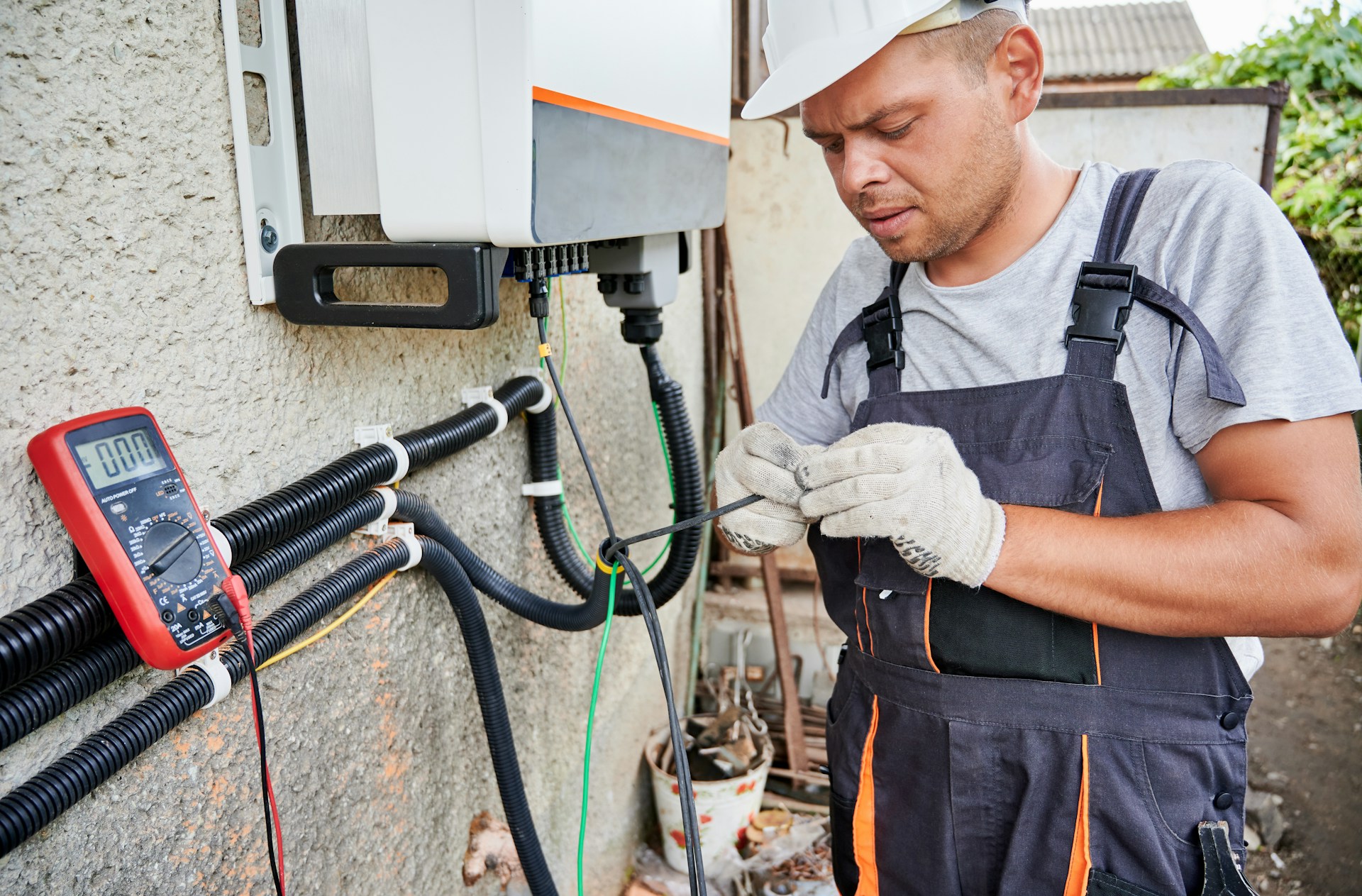
Install, maintain and repair electrical systems in industrial, commercial and residential environments.
Average salary £38,616 a year
Key requirement: ECS card commonly required for electrical installation work and commissioning/sign-off. All routes require an industry assessment of occupational competence (AM2).
 Where this job could lead
With experience and further learning you could progress to:
- Electrical supervisor
- Building services engineer
- Electrical engineer
- Project engineer
- Contracts manager
 Other ways in
You might also be able to move into this job from:
- Domestic electrician roles
- Electrical labourer roles
- Facilities maintenance roles
- Maintenance operative roles
- Construction trades with electrical experience
 Start here
Did you know? You can move between technical and academic pathways.
 Technical route
Gain practical skills through vocational qualifications, apprenticeships and real-world experience.
-
Level 2
-
GCSEs / vocational GCSEs
May include English, mathematics, physics, engineering or design technology
-
Certificate/diploma
May include electrical installation, engineering or building services
-
-
Level 3
-
T Level
Building services engineering for construction
-
Apprenticeship
Installation and maintenance electrician
-
Diploma/extended diploma
Electrotechnical qualification
-
 Academic route
Study classroom-based qualifications and progress to higher education.
-
Level 2
-
GCSEs / vocational GCSEs
May include mathematics, English language, combined science, design and technology, engineering or digital technology
-
-
Level 3
-
A Levels
May include mathematics, physics, design and technology
-
T Level
Building services engineering for construction
-
 Further learning options
-
Level 4
-
HNC or diploma
Typically electrical engineering, building services or engineering technologies
-
Apprenticeship
Building services engineering senior technician
-
-
Level 5
-
Apprenticeship
Electrical or electronic technical support engineer
-
HND or foundation degree
Typically electrical engineering, building services engineering or energy technologies
-
-
Level 6
-
Degree
Typically electrical engineering, power engineering or building services engineering
-
Gain experience and develop your skills
-

Job shadowing
Shadowing qualified electricians on installation, testing and maintenance work.
-

Work experience
Placements with electrical contractors, maintenance teams or building services companies.
-

Clubs and enrichment
STEM clubs, engineering societies or electrical skills competitions.
-

Volunteering
Assisting with community building projects.
-

Projects
Wiring circuits, fault-finding and electrical installation projects.
The routes shown are examples and do not include every option. You do not need to complete every stage shown, and people may enter or progress at different points depending on their skills and experience.
Based on Skills England occupational standards and the UK Standard Skills Classification. Qualification names are examples; availability varies by provider.